
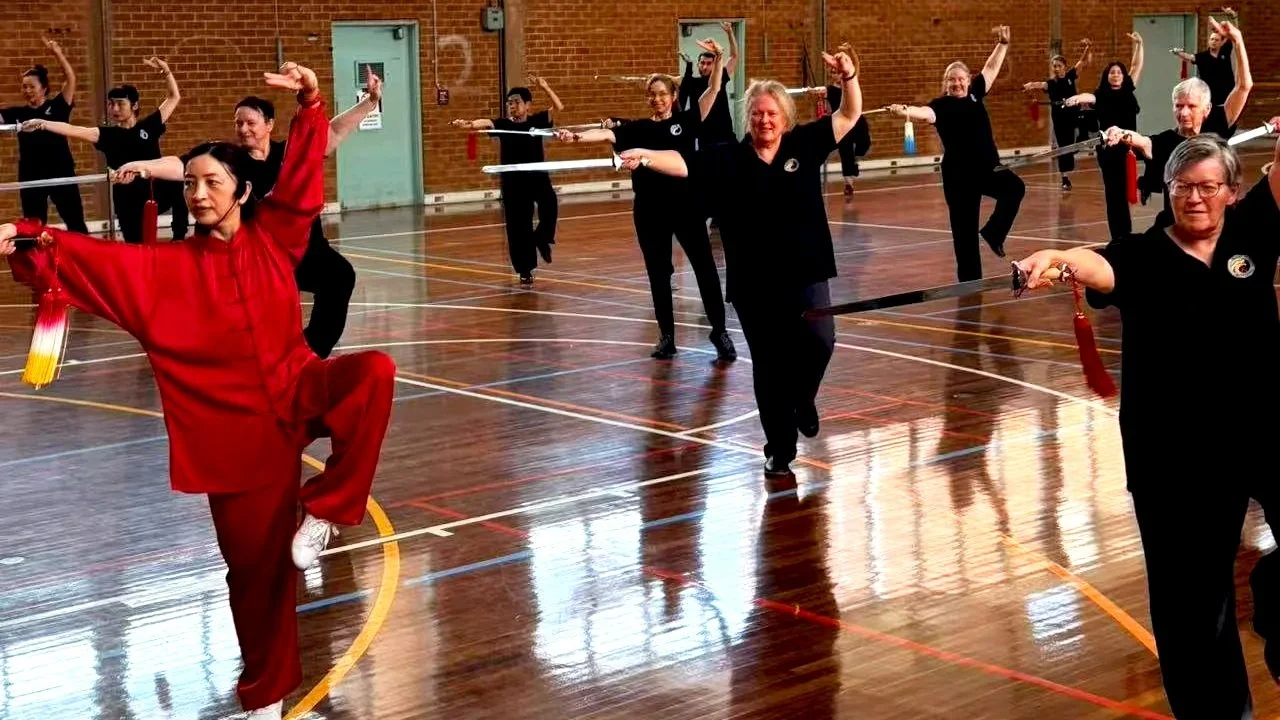
Tai Chi has long been celebrated for its calming movements and whole‑body health benefits — but a new study published on 12 September 2026 reveals something even more remarkable. Older adults who practise Tai Chi regularly don’t just move with better balance; their brains coordinate posture in a smoother, more connected, and more efficient way.
This research offers a powerful reminder: slow, mindful practice can reshape how the brain supports stability, confidence, and healthy ageing.
Research Summary
The study, published 12 September 2026, explored postural control and brain activity in older adults. Researchers compared 36 long‑term Tai Chi practitioners with 25 healthy adults who had never practised Tai Chi.
Participants completed four standing tasks — from simple quiet stance to more challenging narrow and tandem stances — while researchers measured:
Brain activation using functional near‑infrared spectroscopy (fNIRS)
Functional connectivity (how well different brain regions communicate)
Center of pressure (COP) behaviour, which shows how the body maintains balance
“COP analysis further indicated that Tai Chi practitioners exhibited a more controlled postural strategy, characterized by smoother and less abrupt postural adjustments.”
What the Study Found
In simple terms - Tai Chi practitioners showed better balance, stronger brain coordination, and smoother postural adjustments than non‑practitioners.
1. Stronger Brain Activation in Key Balance Regions
Tai Chi practitioners showed higher activation in the:
somatosensory cortex (body awareness)
motor cortex (movement control), and
prefrontal cortex (attention and decision-making)
This means Tai Chi helps the brain stay more engaged and responsive during balance challenges.
2. Better Communication Between Brain Regions
Practitioners demonstrated greater functional connectivity between the motor cortex, somatosensory cortex, and supplementary motor area. This “sensorimotor synchronization” supports coordinated, stable movement — a hallmark of Tai Chi practice.
3. Smoother, More Controlled Balance Adjustments
COP analysis showed:
Lower sample entropy (more regular sway patterns)
Lower mean power frequency (less abrupt corrections)
Higher low‑frequency energy (slower, more deliberate adjustments)
Together, these indicate a calmer, more controlled postural strategy — exactly what Tai Chi trains through slow, mindful weight shifting.
4. Reduced Reliance on Rapid, Stressful Corrections
Practitioners relied less on fast, reflexive balance corrections and more on steady, intentional control. This is especially important for older adults, as rapid corrections are where falls often occur.
What This Means
This research beautifully validates what you feel in your practice:
The slow, mindful transitions in forms strengthen the brain pathways that support balance.
The continuous weight shifting enhances proprioception — your sense of where your body is in space.
The calm focus cultivated in class improves prefrontal engagement, helping you stay steady even in challenging situations.
The whole‑body coordination of Wulong’s teaching approach aligns perfectly with the increased sensorimotor connectivity seen in long‑term practitioners.
For newcomers, this study shows that Tai Chi is far more than gentle movement — it is a scientifically supported method for improving balance, brain function, and confidence in everyday life.
Closing Call to Action
Read the research Long‑term Tai Chi practice promotes cortical synchronization in postural control among older adults published 12 September 2026 here: https://doi.org/10.1186/s12906-026-05600-2
If you are looking for a program to support your health, try a Wulong class today. Click here to see all our class locations and timings. https://www.wulongtaichi.com.au/tai-chi-classes