
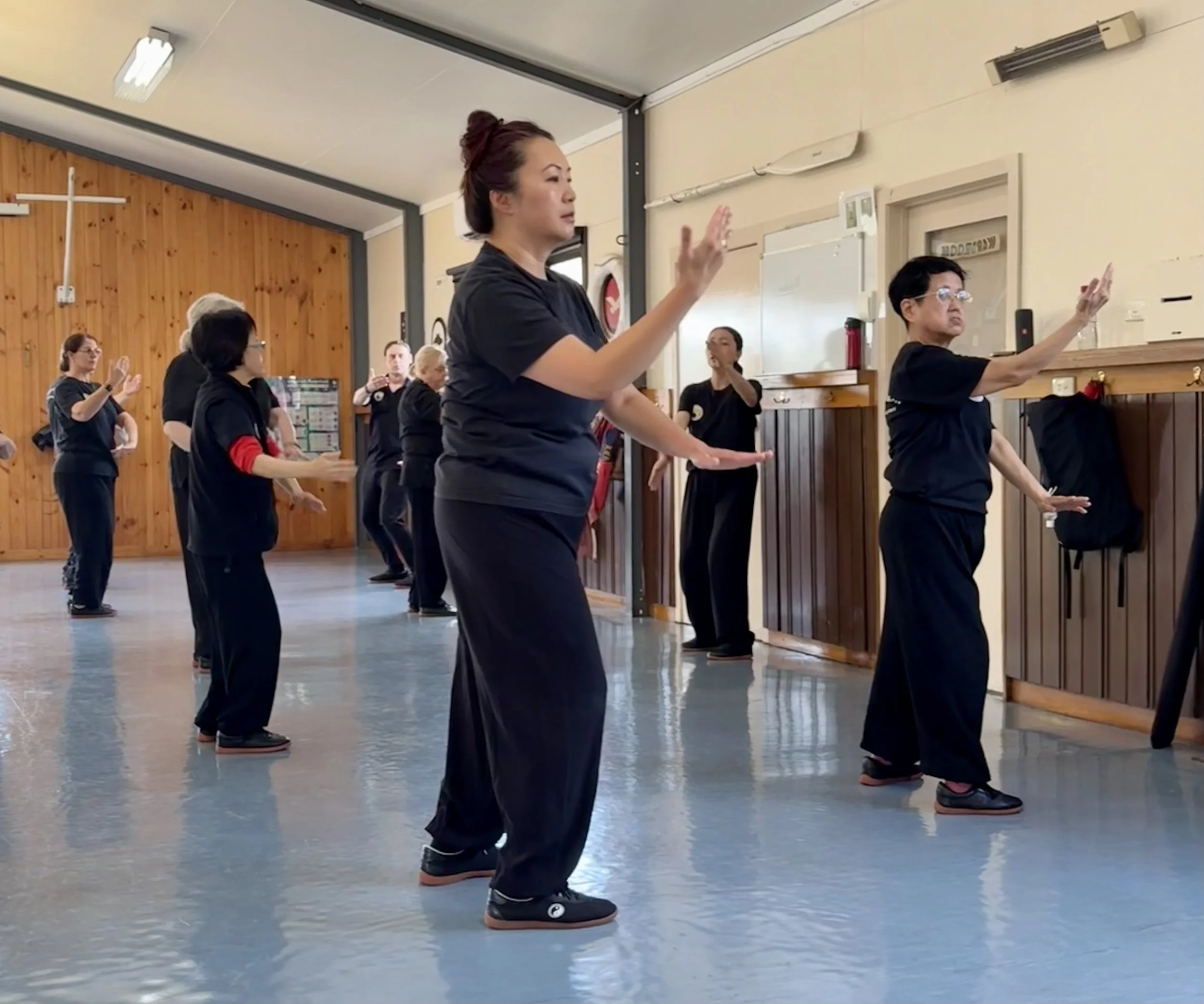
A new systematic review published in 2026 provides strong scientific evidence supporting Tai Chi as an effective, safe and accessible practice for improving balance, strength and overall health—particularly as we age. These findings are highly relevant not only for older adults, but also for Wulong Tai Chi Kung Fu students of all ages who are building foundations for lifelong health.
What was studied?
The research examined how Tai Chi affects balance, strength and fall risk—an important public health issue worldwide.
Falls are a leading cause of injury, disability and hospitalisation in older adults. Age‑related changes such as reduced leg strength, poorer balance, fear of falling and reduced coordination significantly increase fall risk.
The methodology comprised a systematic review following PRISMA guidelines including 7 randomised controlled trials involving 1,017 adults aged 60 years and over. The databases searched were PubMed, SciELO, LILACS and Google Scholar for studies published between 2015 and 2025 of adapted Tai Chi programs (short forms, therapeutic and simplified sequences).
The researchers focused on fall incidence and key fall‑related factors, including balance, lower‑limb strength, mobility, posture, dual‑task ability (movement plus thinking), fear of falling and mood.
Highlights of the findings
All included studies showed positive effects of Tai Chi on fall‑related health factors. One high‑quality trial showed a direct reduction in the number of falls and fall‑related injuries.
Tai Chi was often as effective or more effective than other exercise programs and programs were safe, low‑impact and suitable for long‑term practice.
The review showed that Tai Chi delivers a broad range of benefits highly relevant to Wulong students and the wider community.
1. Improved Balance and Postural Control
Multiple studies reported improvements in static and dynamic balance, single‑leg stability, and ontrol of the body’s centre of mass. These improvements help reduce wobbling, stiffness and loss of balance during everyday activities such as walking, turning, and climbing stairs.
2. Increased Lower‑Limb Strength
Tai Chi significantly improved leg strength, sit‑to‑stand performance and walking speed. Strong legs are essential for both fall prevention and effective martial arts practice, supporting rooting, stepping and stable stances.
3. Better Coordination Under Real‑Life Conditions
Several studies measured dual‑task performance, such as maintaining balance while responding to an auditory or mental task. Tai Chi practitioners showed improved coordination, better integration of mind and body and reduced sway during complex movements.
This supports Tai Chi’s traditional training emphasis on awareness, intent and whole‑body connection.
4. Reduced Fear of Falling and Improved Confidence
Fear of falling can lead to reduced activity and declining health. Tai Chi practice significantly reduced fear of falling and anxiety around movement.
Participants gained confidence in their ability to move safely—an important benefit for both beginners and advanced students.
5. Positive Effects on Mood and Mental Wellbeing
Several studies also reported improvements in mood, depressive symptoms and emotional state. The combination of mindful movement, breathing and focused attention appears to support mental and emotional health alongside physical benefits.
6. Safe, Sustainable and Accessible Practice
The review found that adapted Tai Chi programs were most effective when practised 2–4 times per week, taught in manageable, progressive sequences, and balanced between simplicity and technical richness.
This aligns closely with the Wulong teaching approach, which emphasises structured progression, correct foundations and long‑term engagement.
What This Means for Practitioners
For Wulong students, this research strongly supports Tai Chi not only as a martial art, but as a lifelong health system. Regular Tai Chi practice builds balance, strength and stability that protect the body as it ages, enhances awareness, coordination and movement efficiency, supports injury prevention and recovery, strengthens mental focus and emotional resilience and creates a sustainable foundation for daily life.
Importantly, the research confirms that consistent, well‑structured practice matters more than intensity, reinforcing the value of attending regular classes and progressing steadily over time.
For the wider community, Tai Chi offers a proven way to support health today while investing in strength, balance and confidence for the future.
Read the research titled “The Effects of Tai Chi Chuan on Fall Prevention in the Elderly: A Systematic Review” published 7 April 2026 here: https://doi.org/10.17784/mtprehabjournal.2026.24.1443
If you are looking for a program to support your health, try a Wulong class today. Click here to see all our class locations and timings. https://www.wulongtaichi.com.au/tai-chi-classes