For many older adults, maintaining strong bones can feel like an uphill climb. Yet new research shows that slow, mindful movement practices like Yijinjing and Baduanjin—core elements of Chinese Health Qigong—can support bone health.
Research Summary
A clinical trial published in March 2025 investigated how Yijinjing (YJJ), and Baduanjin (BDJ) affect bone mineral density (BMD) and bone metabolism in older women. The health issue at the centre of the study was age‑related bone loss, particularly osteoporosis risk.
Researchers studied 84 women aged 60–70, randomly assigned to one of four groups: resistance training, Yijinjing and Baduanjin, or a non‑exercise control group. All participants took Caltrate D (calcium + vitamin D3) and followed a calcium‑rich diet. The exercise groups trained three times per week for 24 weeks, with each session lasting 60 minutes.
Bone density at the lumbar spine (L2–4) and proximal femur, along with blood markers of bone formation and bone resorption, were measured before and after the 24‑week period.
The key finding?
“Yijinjing and Baduanjin combined with Caltrate D for 24 weeks can increase lumbar bone mineral density … and decrease the bone resorption marker ß‑CTX in older women.”
In other words, the Qigong practices performed in Wulong classes improved bone health just as effectively as resistance training.
Highlights: What the Study Found
1. Improved Lumbar Spine Bone Density
Yijinjing and Baduanjin—showed significant increases in lumbar spine bone marrow density compared to the control group. This is especially meaningful because the lumbar spine is a common site of age‑related bone loss.
2. Increased Bone Formation
Blood levels of PINP, a marker of new bone formation, rose significantly in Yijinjing and Baduanjin groups. The study notes:
“PINP… increased” after 24 weeks of YJJ and BDJ.
This suggests the body was actively building stronger bone tissue.
3. Reduced Bone Breakdown
Levels of ß‑CTX, a marker of bone resorption (breakdown), decreased across all exercise groups. Lower ß‑CTX means less bone loss—an essential factor in preventing osteoporosis.
4. Gentle Qigong = Comparable to Resistance Training
Despite differences in movement style and intensity, Yijinjing and Baduanjin produced the same positive changes in bone health as resistance training.
“Yijinjing and Baduanjin had the same effect on improving bone marrow density … as resistance training with the same exercise cycle and frequency.”
This is a powerful finding for older adults who prefer low‑impact, meditative exercise.
5. Safe, Accessible, and Sustainable
The study emphasised that Yijinjing and Baduanjin involve slow, simple movements suitable for older adults, making them ideal long‑term practices for maintaining bone health.
What This Means
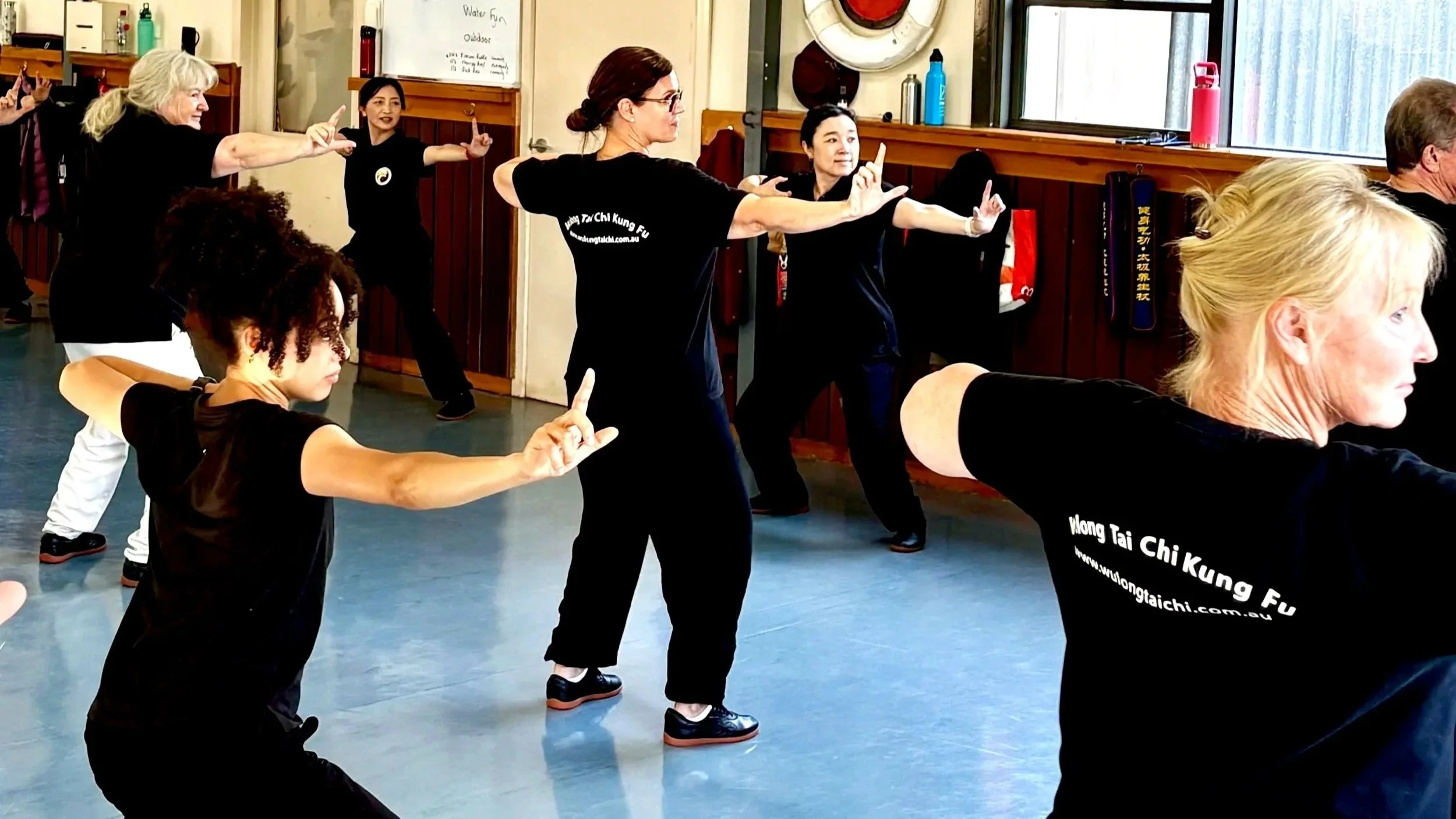
Yijinjing and Baduanjin—both taught within Wulong’s curriculum—use controlled stretching, coordinated breathing, and full‑body engagement. These movements create mechanical stimulation through muscle contraction and joint rotation, which the study notes can “activate osteoblasts and promote bone formation.”
For existing students, this means your regular practice is doing more than improving balance, relaxation, and mobility—it’s supporting your long‑term skeletal health.
For newcomers or health‑conscious readers exploring Qigong for the first time, this study offers reassurance: you don’t need high‑intensity workouts to strengthen your bones. The slow, flowing movements of qigong are scientifically supported, safe, and accessible for all fitness levels.
Most importantly, these practices are enjoyable, community‑based, and sustainable—qualities that help people stay active for life.
Closing Call to Action
Read the research published 27 March 2025 here https://doi.org/10.1186/s12906-026-05600-2
If you are looking for a program to support your health, try a Wulong class today. Click here to see all our class locations and timings https://www.wulongtaichi.com.au/tai-chi-classes