
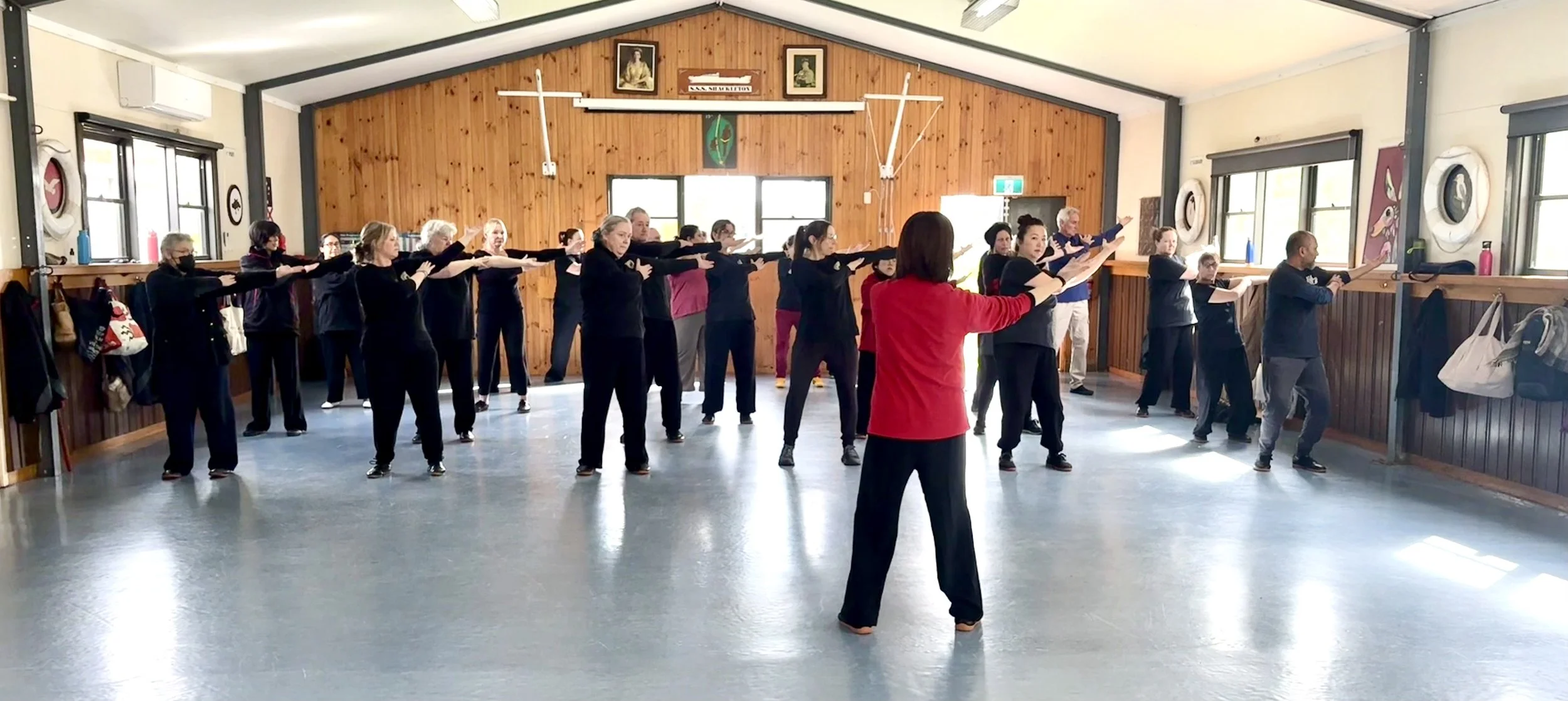
As we age, maintaining mobility becomes one of the most important factors in preserving independence, confidence, and quality of life. A recent clinical trial found that a simple 8-form tai chi program improved mobility more effectively than a health education and home exercise program for older adults living with knee osteoarthritis and age-related muscle loss. These findings add to the growing evidence supporting the many tai chi benefits for healthy ageing.
About the Research
The study was published in September 2026 in the journal Osteoarthritis and Cartilage Open. Researchers investigated people living with sarcopenic knee osteoarthritis, a condition that combines knee osteoarthritis with age-related loss of muscle strength and function. This combination can make everyday activities such as standing up, walking, and maintaining balance more challenging.
The randomised clinical trial involved 96 adults aged 65 to 85 years living in the community. Participants were divided into two groups:
A Tai Chi group that learned and practised a simplified 8-form Yang-style tai chi program for 12 weeks.
A comparison group that received health education and a progressive home exercise program.
Researchers assessed participants at multiple points over a 26-week period, measuring mobility, pain, confidence in movement, physical function, and other health outcomes.
What did the researchers find?
After 12 weeks, the tai chi group experienced significantly greater improvements in mobility than the comparison group. More than half of the tai chi participants achieved a clinically meaningful improvement in their ability to stand, walk, turn, and sit, compared with just over one in ten participants in the comparison group. Benefits were still evident 14 weeks after the formal program ended.
The study concluded that simplified 8-form tai chi can be an effective mobility-focused intervention for older adults experiencing both knee osteoarthritis and muscle decline.
Key Health Benefits Identified
1. Improved Mobility and Everyday Movement
The strongest was improved mobility. Participants practising tai chi demonstrated better performance in a standard mobility test that measures the ability to stand up, walk, turn, and sit down safely and efficiently. These are fundamental movements that support independence in daily life.
2. Greater Likelihood of Meaningful Improvement
Researchers found that 58.3% of tai chi participants achieved a clinically important mobility improvement, compared with 12.5% in the comparison group after 12 weeks. This suggests that tai chi did not just produce small average improvements, but helped many individuals achieve noticeable, real-world benefits.
3. Reduced Knee Pain During Daily Activities
Participants practising tai chi reported greater improvements in knee pain measured through activity-based assessments. This is especially relevant for older adults who may find walking, climbing stairs, or standing for extended periods uncomfortable.
4. Increased Confidence in Movement
Tai chi participants also showed greater improvements in confidence when performing everyday activities without falling. Feeling more secure while moving can encourage people to remain active and engaged in the things they enjoy.
5. Benefits That Lasted Beyond the Program
Importantly, improvements did not disappear when the formal classes ended. Researchers observed ongoing mobility benefits at the 26-week follow-up, suggesting that consistent practice can create lasting positive changes.
What This Means
Tai chi is much more than gentle exercise. The study highlights several elements that are central to the Wulong Tai Chi approach: controlled weight shifting, balanced posture, coordinated movement, mindful attention, and regular practice. These qualities help develop body awareness, stability, and efficient movement patterns that can support healthy ageing and everyday function.
The findings align with the broader tradition of mind-body practice that underpins both tai chi and qigong. While this study focused specifically on tai chi, it reflects the same principle embraced in Wulong Tai Chi classes: gentle, intentional movement can be a powerful way to support physical wellbeing, resilience, and quality of life.
Read the Research
Read the research Effect of 8-form Tai Chi vs health education on mobility in older adults with sarcopenic knee osteoarthritis: A randomized clinical trial published September 2026 https://doi.org/10.1016/j.ocarto.2026.100881
If you are looking for a program to support your health, try a Wulong class today. Click here to see all our class locations and timings https://www.wulongtaichi.com.au/tai-chi-classes