
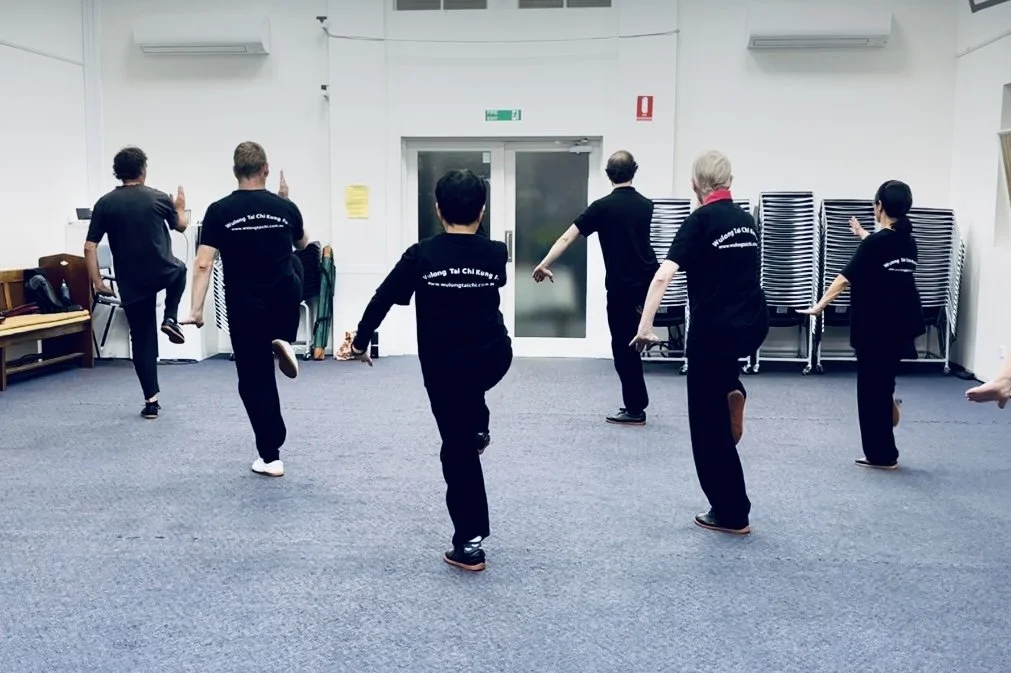
Tai Chi is increasingly recognised as one of the most effective exercises for improving balance, coordination, and mental focus—especially as we age. While Tai Chi has deep roots in traditional practice, modern research is now confirming its powerful health benefits with strong scientific evidence.
A newly published research study demonstrates how Tai Chi improves walking stability, cognitive function, and fall prevention under real‑world conditions. This research provides important insights for Wulong Tai Chi Kung Fu students, older adults, and anyone looking for a safe, effective way to support long‑term health.
What the Research looked at
The study, published in March 2026, investigated how Tai Chi affects balance, walking ability, and brain function in older adults with mild cognitive impairment (MCI)—a condition linked to increased fall risk and reduced independent mobility.
Research Methodology involved 34 adult participants aged 60+ completing a Tai Chi Program (8‑form) 3 times per week for 60 minutes per session over 3 months. And a comparison group who continued normal daily activity.
Assessment Tools included 3D motion capture for walking and balance, cognitive testing and dual‑task walking analysis (walking while thinking or multitasking). This approach allowed researchers to measure how Tai Chi impacts movement when the brain is under load, such as talking while walking—a common cause of falls.
The key health issue studied was walking under cognitive Load. In everyday life, people rarely walk without distractions. Talking, thinking, carrying items, or making decisions can interfere with balance—particularly in older adults and those with early cognitive changes.
The study examined how Tai Chi helps people maintain safe, stable walking while multitasking, an important marker of functional independence and fall risk.
Key Findings: Benefits of Tai Chi and Qigong‑Style Training
Improved Balance and Walking Stability
After completing the Tai Chi program, participants demonstrated longer step and stride lengths, narrower, more stable step width and greater control during the stance phase of walking.
These changes reflect improved balance, posture, and gait efficiency—essential factors in preventing falls.
Better Movement While Multitasking
Tai Chi significantly improved walking performance during dual‑task conditions, such as walking while counting numbers, aming objects or carrying items. This indicates stronger coordination between the brain and body, helping participants move confidently even when attention is divided.
Increased Joint Mobility and Body Control
Participants showed improved movement in the hips, knees, and ankles, particularly increased hip range of motion. These joint improvements support smoother weight transfer, upright posture, and stronger, more controlled stepping.
Reduced Risk of Falls
By improving gait stability, reducing excessive side‑to‑side movement, and increasing postural control, Tai Chi clearly reduced indicators associated with fall risk—one of the most significant health concerns for older adults.
Improved Cognitive Function
Cognitive testing revealed meaningful improvements following the Tai Chi training period. This supports the role of Tai Chi as a mind–body exercise that trains attention, focus, and mental processing alongside physical movement.
Safe, Low‑Impact Exercise for All Ages
The study confirmed Tai Chi as a low‑impact, joint‑friendly exercise suitable for beginners, older adults, and those seeking long‑term health without high physical strain.
Why Tai Chi Is Effective for Healthy Ageing
Tai Chi combines slow, controlled movements, weight shifting and balance training, breath awareness and mental focus. This combination strengthens both physical stability and cognitive‑motor integration, making Tai Chi particularly effective for supporting healthy ageing, mobility, and independence.
What This Means for Wulong Tai Chi Kung Fu Students
For Wulong students, this research confirms the real‑world health value of Tai Chi practice. Tai Chi trainng develops balance and stability, mental clarity under pressure, coordinated movement and posture, long‑term resilience and confidence in everyday movement.
For members of the public, it highlights Tai Chi as an evidence‑based practice that supports health, reduces fall risk, and improves quality of life at any age.
Read the research - Rescuing gait under cognitive load: the benefits of Tai Ci for MCI, published 23 March 2026 DOI:10.3389/fphys.2026.1770084
If you are looking for a program to support your health, try a Wulong class today.
Click here to see all our class locations and timings. https://www.wulongtaichi.com.au/tai-chi-classes