
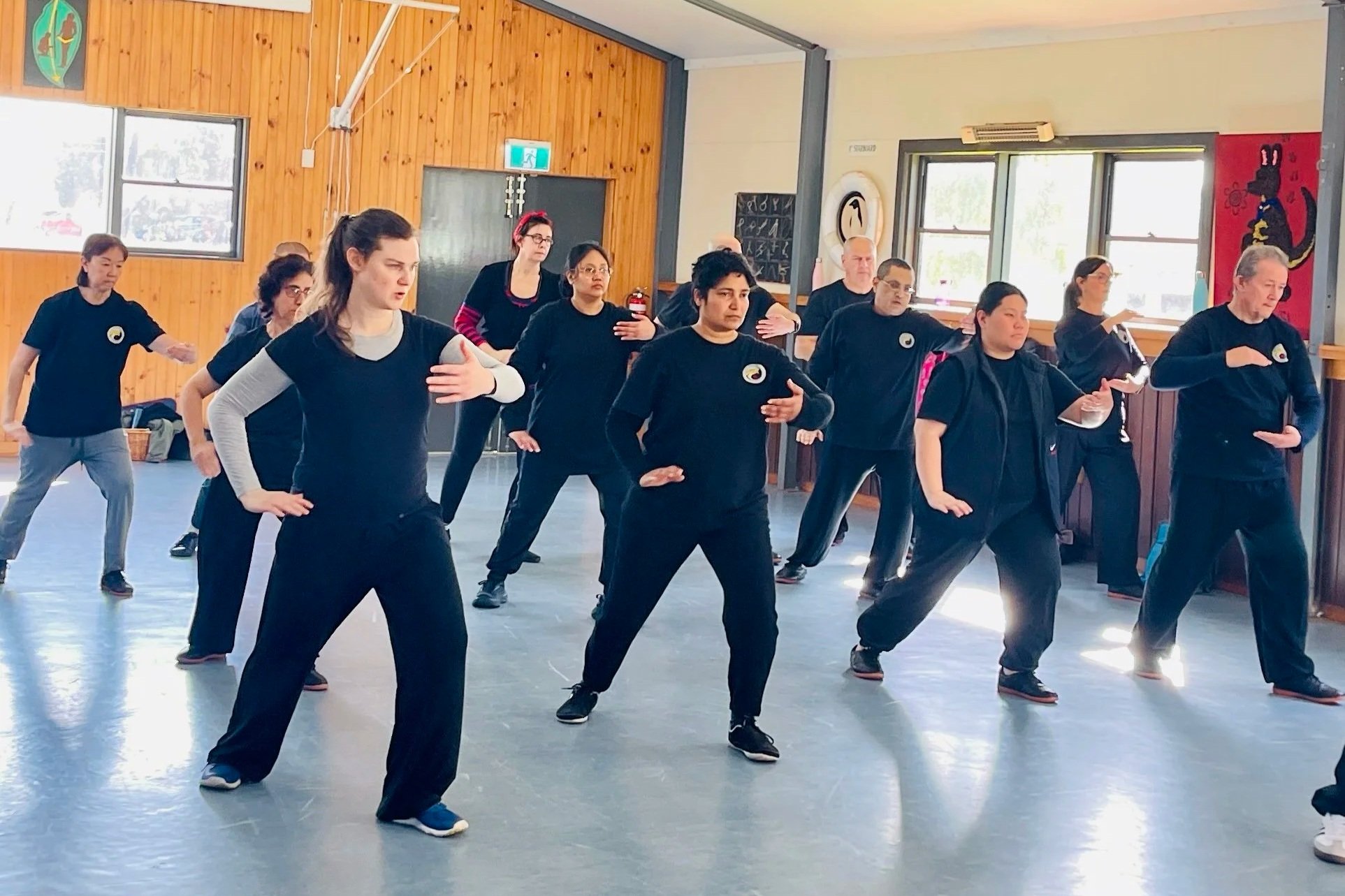
Tai Chi is recognised for its calming movements, mindful breathing and ability to bring the body and mind back into balance.
Summary of the Research
A new 2026 randomized controlled trial published in Frontiers in Public Health provides strong scientific evidence that Tai Chi meaningfully improves stress regulation, attention, and psychological resilience.
The study investigated whether an 8‑week Tai Chi program could improve three key areas of psychological health: stress regulation, attentional performance and psychological resilience
The methodology design involved a randomized controlled trial of 68 adult participants aged 30–55 completing three 60 minute sessions per week over 8 weeks. Research measures included established tests such as the Perceived Stress Scale (PSS‑10), Attention Network Test (ANT) and Connor-Davidson Resilience Scale (CD‑RISC‑25).
The Tai Chi intervention comprised the 24‑form simplified Yang style, emphasising slow movement, postural alignment, controlled breathing, and mindful attention.
Key Findings
The Tai Chi group showed significant improvements across all outcomes and demonstrated moderate‑to‑large effect sizes—meaning the improvements were not only statistically significant but also meaningful in real life.
“The Tai Chi group exhibited a significant reduction in perceived stress, faster attentional reaction times, and a substantial increase in psychological resilience following the intervention.”
Highlights of the Findings
1. Tai Chi Reduces Stress
Participants practising Tai Chi experienced a 4.72‑point reduction in perceived stress, while the control group showed no change. This is important because:
Lower stress supports better sleep, mood, and immune function.
Tai Chi’s slow, mindful movements activate the parasympathetic nervous system—the body’s natural “rest and restore” mode.
Regular practice helps regulate emotional responses and reduce tension.
2. Tai Chi Improves Attention and Mental Clarity
The Tai Chi group improved their reaction times by 47.76 milliseconds, indicating sharper focus and faster cognitive processing. This aligned with Tai Chi’s emphasis on:
Coordinating breath and movement
Sustaining mindful attention
Maintaining awareness of posture and balance
These elements strengthen the brain’s attentional networks, supporting clearer thinking and better concentration.
3. Tai Chi Builds Psychological Resilience
The largest improvement was in resilience, with the Tai Chi group gaining 9.5 points on the CD‑RISC‑25 scale meaning:
Better ability to adapt to stress
Greater emotional stability
Enhanced confidence in handling challenges
For many adults balancing work, family, and life pressures, this is a powerful benefit.
What This Means for students
For Wulong students, this research reinforces the value of training:
The structured, mindful nature of Wulong training directly supports stress reduction.
Regular attendance strengthens attention, focus, and mental clarity—skills that carry into daily life.
The resilience-building effects help students feel more grounded, capable, and emotionally balanced.
For new students or community members considering Tai Chi, this study shows that even 8 weeks of consistent practice can create meaningful improvements in wellbeing.
Conclusion
This 2026 study provides strong scientific evidence that Tai Chi is an effective, accessible, and scalable way to improve stress regulation, attention, and psychological resilience. Whether you are a long‑term Wulong student or someone exploring Tai Chi for the first time, the benefits extend far beyond physical movement—they support a healthier, calmer, and more resilient life.
Read the research Tai Chi as a public health intervention: effects on stress regulation, attention, and psychological resilience in adults published 04 May 2026 here: https://doi.org/10.3389/fpubh.2026.1791759
If you are looking for a program to support your health, try a Wulong class today. Click here to see all our class locations and timings. https://www.wulongtaichi.com.au/tai-chi-classes