Tai Chi and Qigong have been practised for centuries to cultivate strength, balance, breath, and mental focus. In modern health research, tai chi and qigong are recognised as slow, coordinated physical movements with breathing and mindful attention: gentle, low‑impact, and accessible for people of all ages and abilities.
Tai Chi and Qigongs such as Baduanjin (Eight‑Section Brocade), Yijinjing (Muscle‑Tendon Changing Classic), Wuqinxi (Five‑Animal Frolics) and Liuzijue (Six‑Healing Sounds) were the key exercises included in the research search strategy of this 2026 systematic review.
Summary of the Research
A major systematic review and meta‑analysis published on 14 January 2026 in Frontiers in Neurology examined the effects of tai chi and qigong on people living with Parkinson’s disease (PD). Parkinson’s disease is a progressive neurological condition affecting movement, balance, gait, and daily function. The authors noted that
“[Tai chi and qigong] significantly improved patients’ motor function and balance function compared with usual care.”
The review encompassed 13 randomised controlled trials involving 859 participants. The researchers searched seven major databases using terms such as Tai Chi, Qigong, Baduanjin, Yijinjing, Wuqinxi, and Liuzijue combined with Parkinson’s disease.
Participants were adults diagnosed with PD (Hoehn & Yahr stages 1–4). The studies compared tai chi or qigong practice with usual care or no exercise.
Key Finding
The meta‑analysis found that tai chi and qigong significantly improved motor function and balance, and individual studies suggested possible benefits for gait and quality of life. As the authors conclude,
“We recommend Qigong as the preferred modality… with a duration of ≤12 weeks and frequency of >3 times per week.”
Highlights of the Findings
1. Improved Motor Function
Both Tai Chi and Qigong reduced motor impairment, with Qigong showing the strongest effect. Improved motor control supports safer movement, greater independence, and improved confidence.
2. Better Balance and Reduced Fall Risk
Balance improvements were consistent across studies. Participants showed better stability, improved transitional movements, faster, safer mobility and reduced fall risk which is especially important for older adults and people with PD.
3. Gentle, Accessible, and Safe
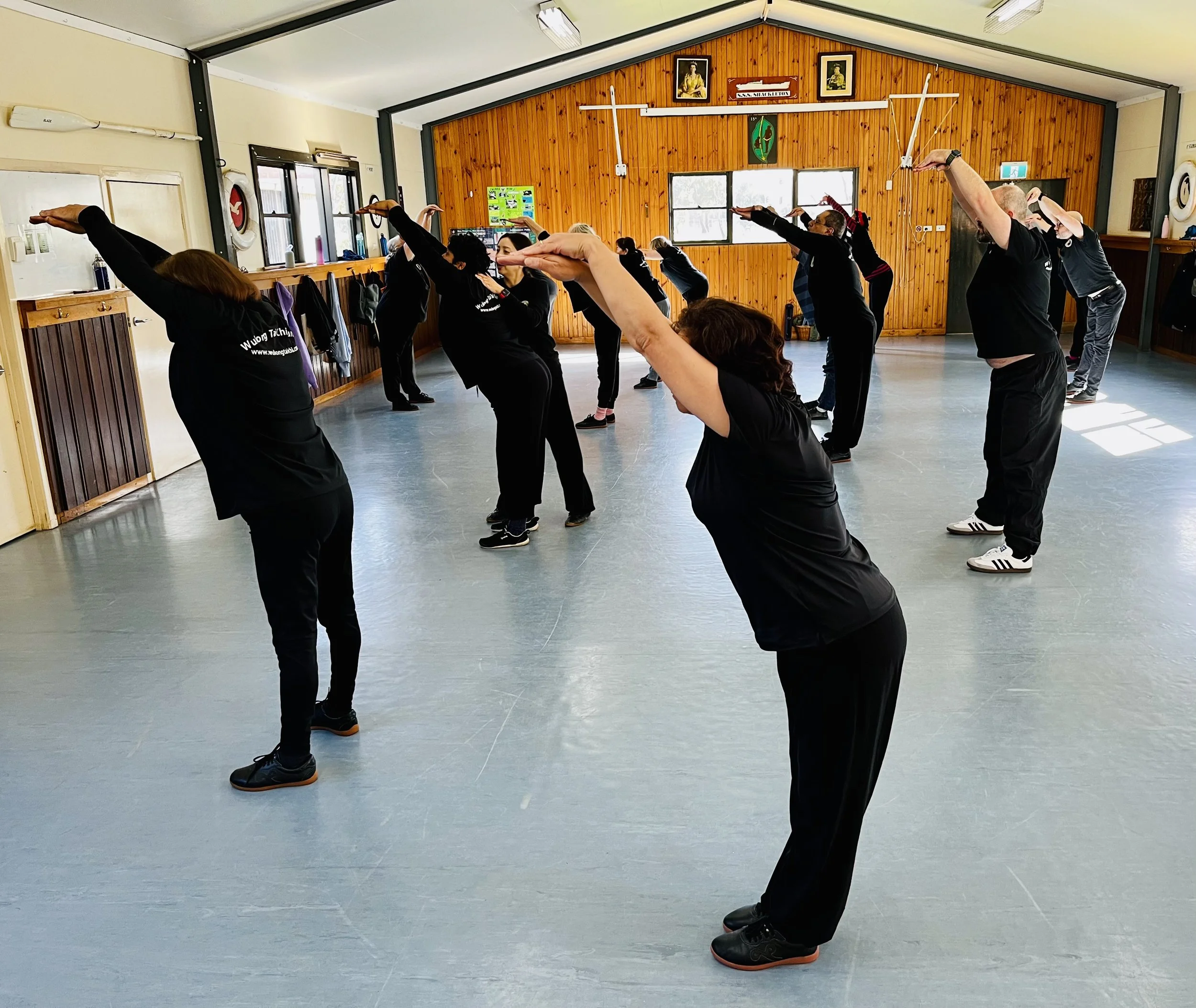
The review emphasised that tai and qigong are low‑impact, cost‑effective, safe for mild‑to‑moderate PD, suitable for older adults and easy to practise independently. This aligns perfectly with Wulong’s teaching approach.
What This Means
For anyone seeking a supportive, evidence‑based practice — this research is encouraging. At Wulong, students can expect
Improved strength, coordination, and mobility
Better balance and stability
A calm, mindful practice that supports wellbeing
A safe, community‑based environment
These benefits support independence, confidence, and daily function — especially for people living with Parkinson’s disease.
Read the Research
Read the research Effects of of traditional Chinese exercises on motor function, balance, gait, and quality of life in patients with Parkinson’s disease: a systematic review and meta-analysis published 14 January 2026 here: https://doi.org/10.3389/fneur.2025.1708466
Ready to Support Your Health?
If you are looking for a program to support your health, try a Wulong class today. Click here to see all our class locations and timings. https://www.wulongtaichi.com.au/tai-chi-classes