
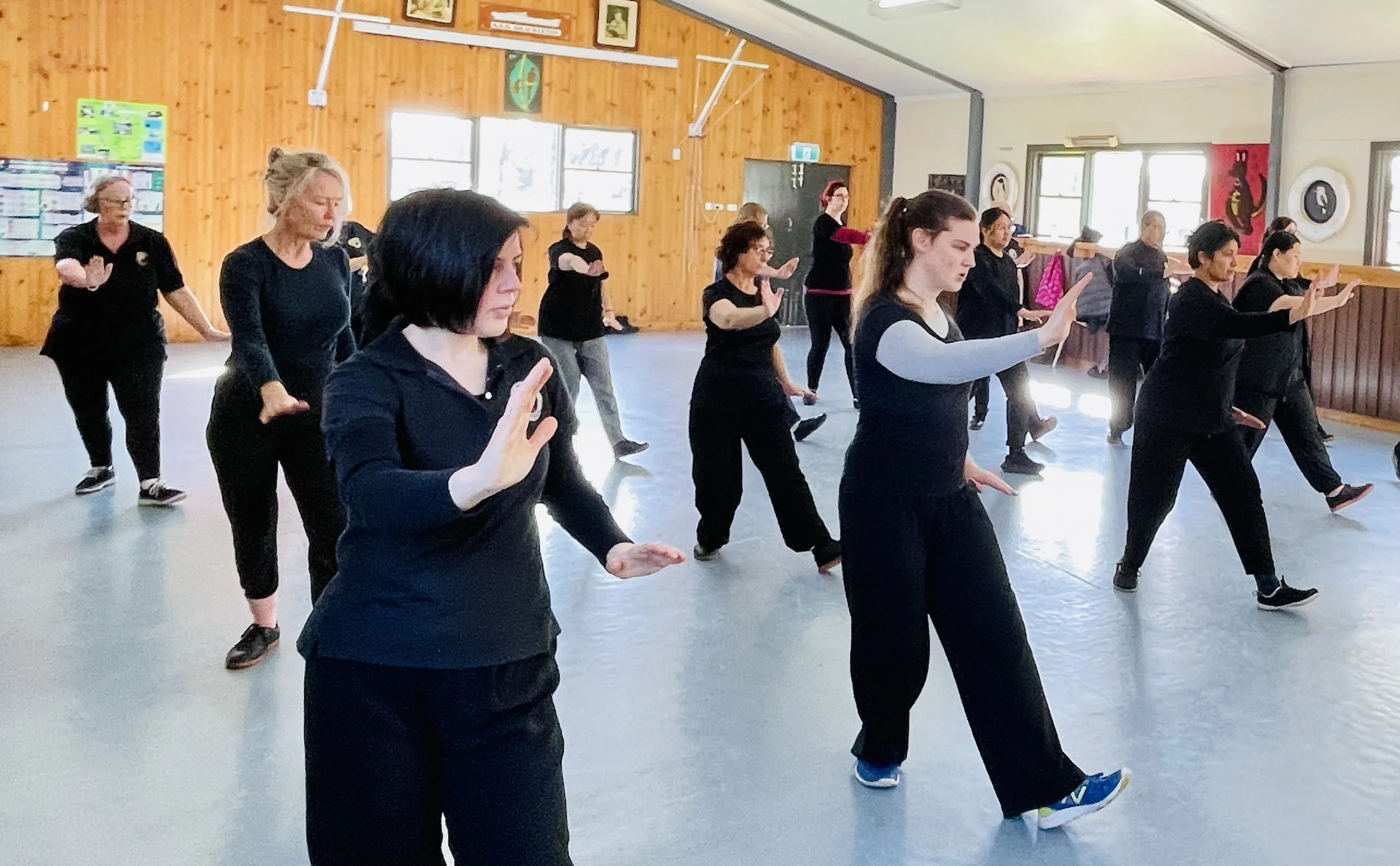
What many people don’t realise is that good balance begins with healthy feet and ankles.
Our feet constantly send information to the brain about the surface beneath us, while our ankles provide critical feedback about body position and movement. Together, these systems help us stay upright, move confidently and react quickly when we lose our balance.
When foot sensation and ankle awareness decline, stability becomes more challenging and the risk of falls increases.
The good news is that a growing body of research shows Tai Chi can help.
A recently published study found that Tai Chi significantly improved foot sensation and ankle stability in older adults and was more effective than brisk walking in several key measures related to balance and fall prevention.
Why Foot and Ankle Stability Matters
Healthy foot sensation allows us to feel the ground beneath us and make subtle adjustments to maintain balance. Ankle proprioception—our awareness of ankle position and movement—helps us react quickly when our footing changes.
These systems work quietly in the background every day, whether we are walking, gardening, exercising or simply moving around the house.
As we age, these sensory systems can become less responsive, making balance more difficult and increasing the likelihood of trips and falls. Research has shown that reduced foot sensation and proprioception are significant contributors to instability in older adults.
The Research
Researchers from China investigated whether Tai Chi could improve foot sensation and ankle proprioception in older adults living with peripheral neuropathy, a condition that commonly causes numbness, reduced sensation and balance difficulties.
Thirty-six participants aged over 60 were randomly assigned to either a Tai Chi group or a brisk walking group. Both groups trained three times per week for eight weeks, with each session lasting 60 minutes. Researchers assessed foot sensation and ankle proprioception before and after the training period.
The results were encouraging.
While both groups experienced improvements, the Tai Chi group achieved significantly greater gains in several measures of foot sensation and ankle awareness. The researchers concluded that Tai Chi was more effective than brisk walking at improving sensory function associated with balance and stability.
How Tai Chi Improves Foot Stability
One of the study’s most important findings was the improvement in plantar tactile sensation—the ability to feel and respond to touch beneath the feet.
Participants practising Tai Chi experienced significant improvements in sensation in key weight-bearing areas of the foot, particularly the heel and outer edge of the foot. These areas play an important role in helping us detect changes in the ground beneath us and maintain balance while standing and walking.
The researchers suggest that Tai Chi’s slow, deliberate and multidirectional movements provide rich sensory stimulation to the feet. Unlike ordinary walking, Tai Chi requires practitioners to shift weight carefully, change direction smoothly and maintain awareness of foot placement throughout every movement.
Over time, this may help improve the body’s ability to process sensory information from the feet and use it more effectively to maintain balance.
How Tai Chi Improves Ankle Stability
The study also found significant improvements in ankle proprioception—the body’s ability to sense joint position and movement without looking.
Participants in the Tai Chi group improved more than those in the brisk walking group, particularly in measures related to ankle movement and control.
This finding makes sense when we consider how Tai Chi is practised.
Tai Chi movements involve continuous weight shifting, controlled stepping and coordinated changes in direction. The ankles are constantly adjusting, stabilising and responding to movement demands. These repeated challenges help train the body’s balance systems and improve awareness of joint position.
In practical terms, improved ankle proprioception may contribute to:
Better balance and stability
Increased confidence when walking
Greater control on uneven surfaces
Improved reactions when footing changes unexpectedly
Reduced risk of trips and falls
More Than Balance
Although the study focused on foot sensation and ankle stability, the benefits extend beyond fall prevention.
When people feel more stable and confident in their movement, they are often more willing to remain active, participate in social activities and continue enjoying the hobbies they love.
Tai Chi offers a gentle, low-impact way to build this confidence. The movements are accessible to people of varying ages and fitness levels, and the practice develops not only physical stability but also concentration, relaxation and body awareness.
Perhaps most encouragingly, participants in this study achieved measurable improvements after only eight weeks of practice.
What This Means
At Wulong, we often hear students say they feel steadier on their feet, more aware of their posture and more confident in their everyday movement.
This research helps explain why.
The slow, flowing movements practised in our classes continuously challenge balance, strengthen coordination and develop awareness of how the feet and ankles work together to support the body.
Whether your goal is to improve balance, maintain mobility as you age, reduce your risk of falls or simply enjoy a gentle and rewarding form of exercise, Tai Chi offers benefits that are supported by both centuries of tradition and modern scientific research.
By improving foot sensation, ankle stability and body awareness, Tai Chi can help you move through life with greater confidence, control and ease.
Read the research published 17 June 2026 here: https://www.frontiersin.org/articles/10.3389/fspor.2026.1780973
If you are looking for a program to support your health, try a Wulong class today. Click here to see all our class locations and timings. https://www.wulongtaichi.com.au/tai-chi-classes