
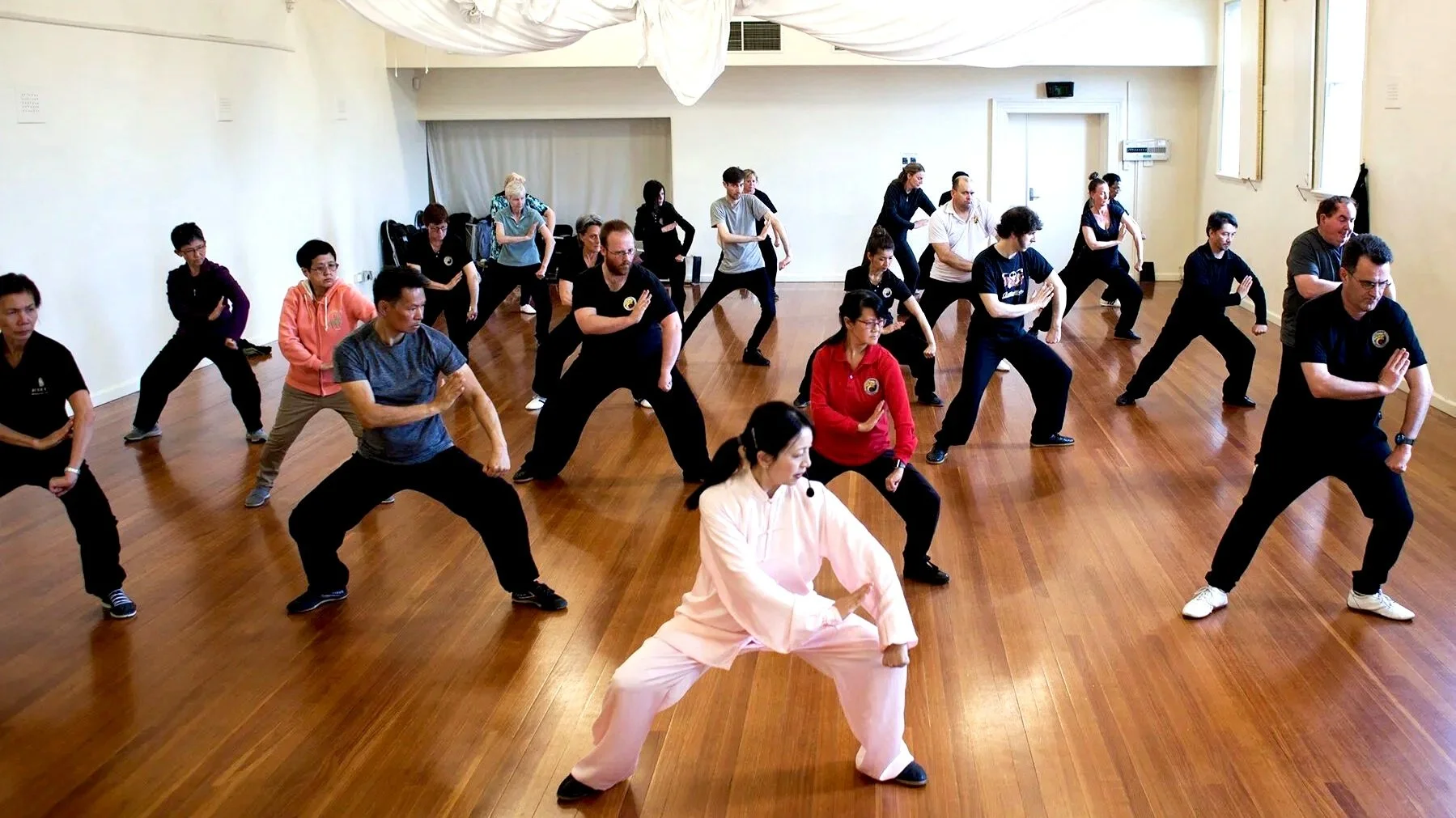
At Wulong Tai Chi Kung Fu, we can feel confident that our practice is about more than just graceful movements—it’s a powerful tool for longevity. However, it’s always nice when modern science catches up to what the masters have taught for centuries.
A groundbreaking study published in 2025 has provided fresh, high-quality evidence that Tai Chi is, quite literally, medicine. Whether you are a long-time Wulong student or someone looking to start your health journey, this research highlights why your time on the mat is so valuable.
The Research: Tai Chi vs. Knee Osteoarthritis (KOA)
Knee osteoarthritis (KOA) is a major cause of disability, leading to pain, stiffness, and a higher risk of falling. Beyond the physical pain, it often brings a heavy psychological burden, including stress and anxiety.
The researchers conducted a Randomized Controlled Trial (RCT) to see if Tai Chi could help older adults (aged 45–70) suffering from KOA.
The methodology involved articipants an 8-week program consisting of four 40-minute sessions per week for 46 adults with diagnosed KOA. Participants practiced the 24-form form, focusing on slow, smooth movements and deep breathing. A control group that maintained their usual lifestyle without structured exercise.
The Highlights: Remarkable Results
The study found that Tai Chi didn't just help a little—it helped significantly across every category measured.
1. Physical Transformation
Function: The Tai Chi group saw a massive 21.6-point improvement in knee function scores, while the control group saw no change.
Lower Limb Strength: Participants increased their leg strength by an average of 24.4 kg.
Better Balance: Balance scores improved by 12.6 points, which is crucial for preventing falls in older age.
2. Psychological Breakthroughs
The research proved that Tai Chi is just as much for the mind as it is for the body. The intervention group experienced:
Reduced Depression: Significant drops in depressive symptoms.
Lower Anxiety: A marked decrease in anxiety levels.
Stress Relief: Clear improvements in overall stress management.
Why does it work?
The researchers pointed to Tai Chi’s emphasis on "sinking" and proper joint alignment. By correcting how we move, we reduce abnormal stress on the knees and create an environment where the body can begin to repair itself.
What This Means?
For our Wulong students, this research validates the "Tai Chi is Medicine" model. It confirms that our focus on correct practice, postural alignment, and the mind-body connection isn't just traditional—it's evidence-based healthcare.
If you’ve been feeling a bit of "creakiness" in your joints or "heaviness" in your mind, your practice is the perfect antidote. The study shows that even just 8 weeks of consistent effort can lead to a "large effect size" in your physical and mental well-being.
Read the research published September 2025 here: https://doi.org/10.3389/fpubh.2025.1661674
If you are looking for a program to support your knee health, try a Wulong class today. Click here to see all our class locations and timings. https://www.wulongtaichi.com.au/tai-chi-classes