
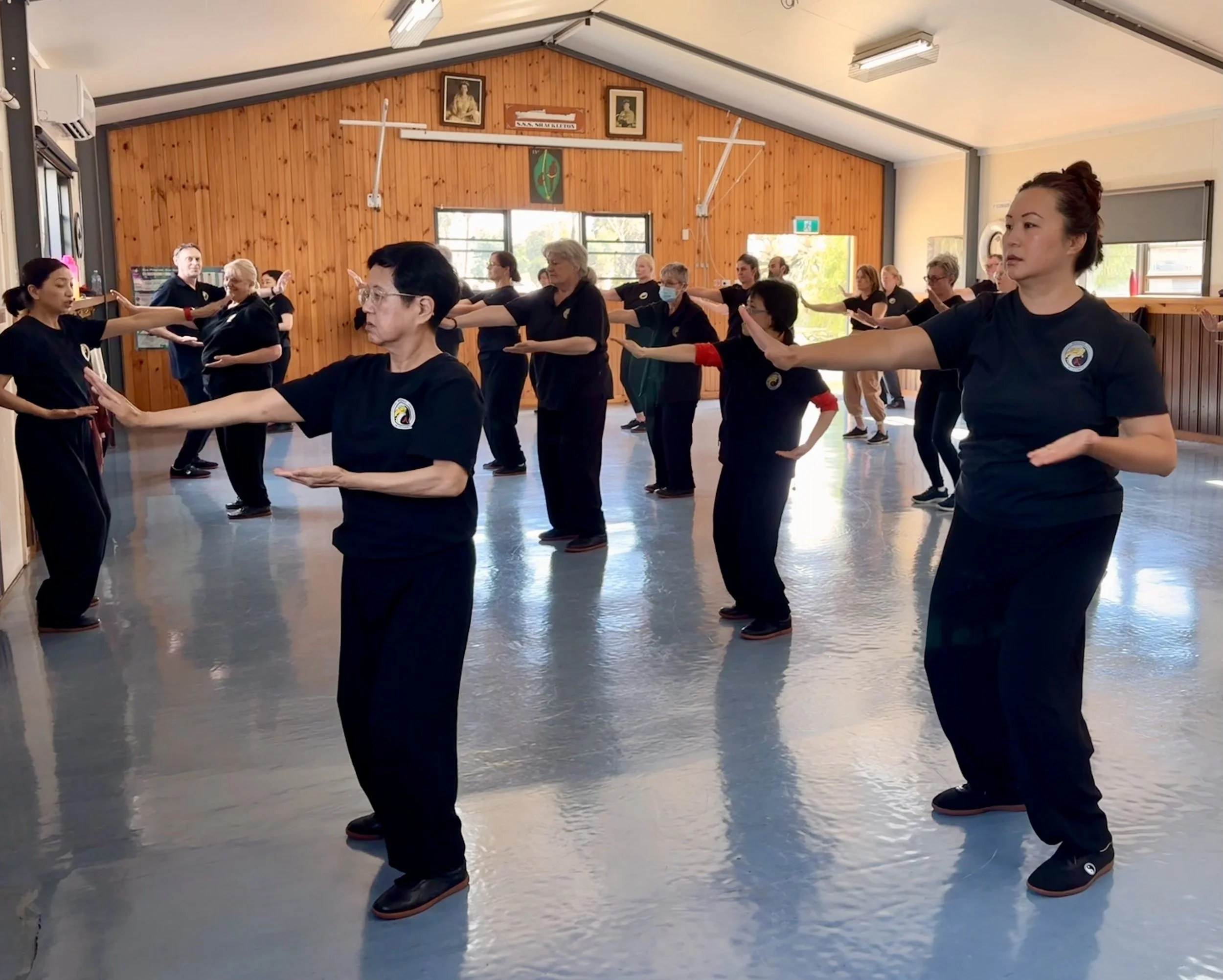
Tai Chi leads to significant improvements in sleep quality for cancer patients, compared with usual care. The improvements were large enough to be clinically meaningful, not just statistically significant.
Sleep disturbance is one of the most common and challenging issues faced by people undergoing cancer treatment. Poor sleep affects mood, immunity, recovery, and overall quality of life. For many, medication offers only partial relief — and often comes with side effects.
A new 2026 systematic review and meta‑analysis, published in Frontiers in Neurology, provides strong evidence that Tai Chi can significantly improve sleep quality for cancer patients. This research adds to the growing body of scientific support for s Tai Chi and Qigong — practices central to the Wulong program.
Summary of the Research
The study, examined randomized controlled trials (RCTs) evaluating Tai Chi as an intervention for sleep problems in cancer patients.
Researchers systematically searched seven major medical databases for RCTs published before January 2026. Only studies using the Pittsburgh Sleep Quality Index (PSQI) — the gold‑standard measure of sleep quality — were included. Three RCTs, all conducted in China, met the criteria, involving 145 participants with lung, gastric, and breast cancers. Tai Chi intervention programs ranged from 8 to 12 weeks, using Yang‑style forms practiced 2–3 times per week.
Health Issue Researched
The review focused specifically on sleep disturbances in cancer patients, a problem affecting up to 60% of people undergoing treatment. Sleep issues are linked to lower immunity, higher inflammation, increased expression of cancer‑related genes, reduced quality of life.
As the authors note:
“Insomnia is also recognized as an important prognostic factor for cancer.”
Highlights of the Findings
1. Tai Chi meaningfully improves sleep quality
Participants practicing Tai Chi showed lower PSQI scores, meaning better sleep across sleep duration, efficiency, disturbances and daytime functioning.
2. Benefits were strongest in breast cancer patients
The subgroup analysis showed that female breast cancer patients practicing Tai Chi for 8 weeks experienced the most significant improvements.
3. Tai Chi supports both physical and emotional wellbeing
The review discusses several mechanisms through which Tai Chi may improve sleep:
Reduced stress and anxiety through mindful movement and breath regulation
Improved nervous system balance, including increased dopamine release
Lower inflammation, with reductions in pro‑inflammatory markers
Enhanced immune function
4. Tai Chi is safe, gentle, and accessible
All included studies used Yang‑style Tai Chi — the same style taught at Wulong — highlighting its suitability for people with varying health conditions, including those undergoing cancer treatment.
What This Means
For Wulong Tai Chi Kung Fu students — and for members of the wider community — this research reinforces what many already experience firsthand. Tai Chi and Qigong are powerful tools for improving sleep, calming the mind, and supporting the body during times of stress or illness.
Whether you are managing a health condition, recovering from treatment, or simply seeking better rest, regular Tai Chi practice can:
Settle the nervous system
Improve emotional resilience
Support immune health
Promote deeper, more restorative sleep
At Wulong, our classes emphasise gentle movement, mindful breathing, and whole‑body relaxation — the same elements identified in the research as key contributors to better sleep.
Read the Research
Read the research Effect of Tai Chi on Sleep Quality of Cancer Patients: A Systematic Review and Meta‑Analysis published 27 April 2026 here: https://doi.org/10.3389/fneur.2026.1670047
If you are looking for a program to support your health, try a Wulong class today.
Click here to see all our class locations and timings. https://www.wulongtaichi.com.au/tai-chi-classes