
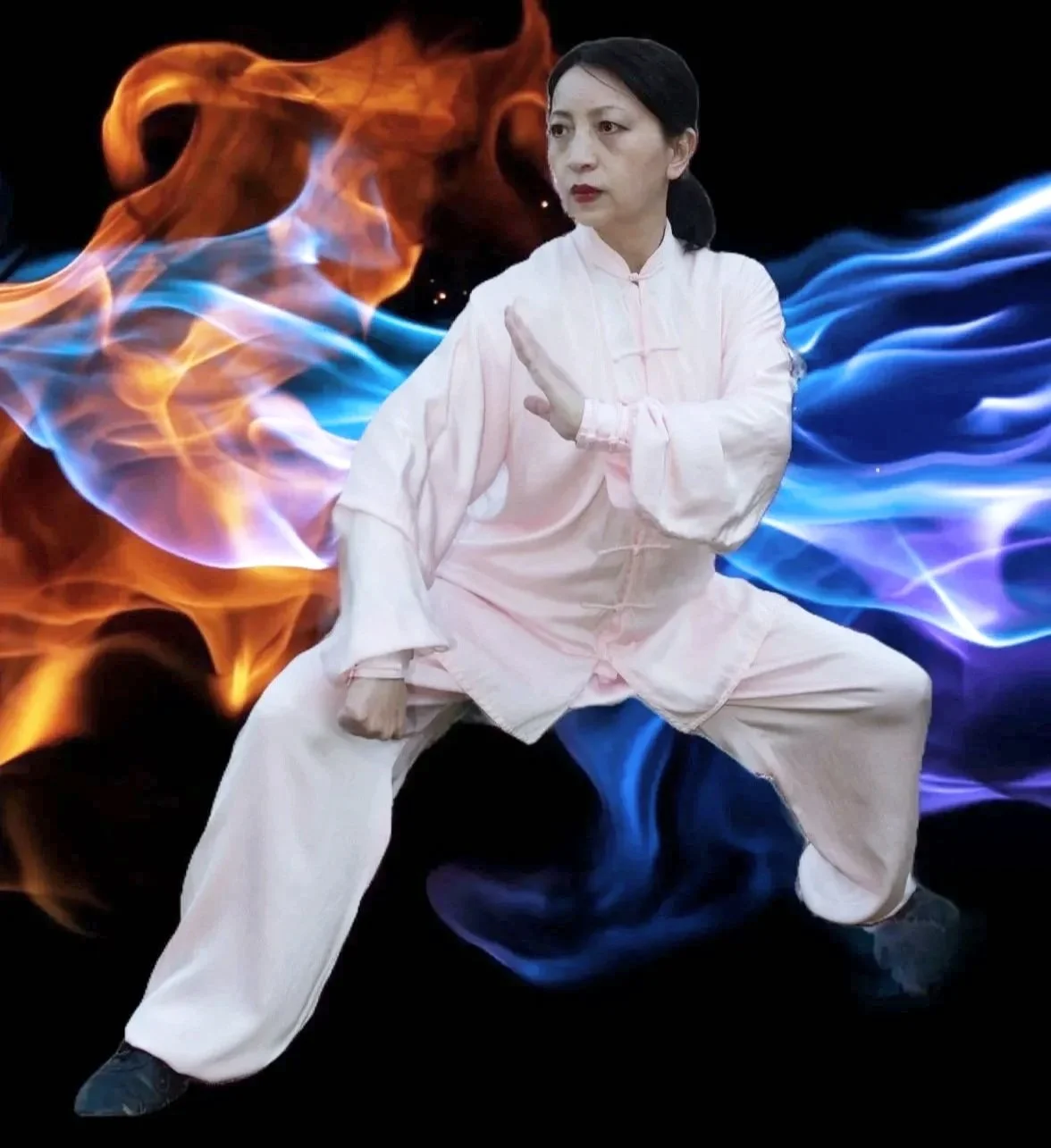
Maintaining strong, healthy knees is essential for daily life, mobility, and long‑term wellbeing. A recent 2026 study published in Frontiers in Physiology offers compelling biomechanical evidence that Tai Chi’s slow, controlled squatting movements may protect the knee joint more effectively than standard gym‑style squats.
Summary of the Research
The research published on 8 May 2026 was focused on how Tai Chi squatting technique affects knee biomechanics compared with standard squatting. The methodology comprised biomechanical comparison of taichi and standard squatting, with a focus on knee joint kinematics, kinetics, muscle activation, and internal stress distribution.
Analysis of 12 experienced Tai Chi practitioners (6 male, 6 female) using 3D motion capture, ground reaction force plates, and surface EMG. Musculoskeletal modelling completed using OpenSim and finite element analysis (FEA) to examine internal cartilage and meniscus stress. The authors explain that “Tai Chi squatting, characterized by slow, controlled movements, is hypothesized to reduce joint load compared to standard squatting” and that the study aimed to compare knee joint kinematics, muscle activation, and internal stress distribution between the two styles.
Key Findings
Tai Chi squatting produced smoother, more controlled knee movement
The study reports that Tai Chi squatting “produced a markedly smoother knee flexion‑extension angle time profile” than standard squats.Tai Chi squatting encouraged more balanced muscle activation
Tai Chi squatting increased activation of the hamstrings and sartorius, shifting effort toward the posterior chain and reducing over‑reliance on the quadriceps.Internal knee stress was more evenly distributed
While peak stress levels were similar, Tai Chi squatting “produced a qualitatively more homogeneous stress distribution across the articular surface,” reducing the focal high‑stress points seen in standard squats.Benefits were especially notable for female practitioners
Women showed greater improvements in balanced muscle co‑activation, a factor linked to reduced ACL and cartilage injury risk.
Highlights for Health and Wellbeing
1. Better Protection for Knee Cartilage
The study’s finite element analysis showed that Tai Chi squatting spreads load more evenly across the knee joint. This reduces “hot spots” of pressure that can contribute to cartilage wear and osteoarthritis over time.
2. Stronger, More Balanced Muscles
Tai Chi’s slow, continuous movement encourages hamstring activation, gluteal engagement and reduced quadriceps dominance. This balanced pattern supports knee stability and reduces strain on ligaments such as the ACL.
3. Safer Squatting for All Ages
Because Tai Chi squatting avoids deep, abrupt movements, it is suitable for older adults, people with knee sensitivity, beginners returning to exercise and individuals seeking low‑impact strengthening.
4. Especially Beneficial for Women
Women naturally experience higher ACL injury risk due to anatomical and neuromuscular factors. The study found that Tai Chi squatting helps counter these risks by promoting greater posterior chain activation, improved hip stability and more controlled knee alignment.
What it means
This research reinforces Wulong teachings: slow, mindful movement builds strength without strain. Tai Chi squatting trains the legs, hips, and core while protecting the knees through balanced muscle activation and smooth, continuous motion.
Whether you are practising low stances, transitioning through forms, or building foundational strength, Tai Chi offers a biomechanically sound pathway to long‑term joint health. This study provides modern scientific validation for the protective qualities embedded in our classical training methods.
Read the research
The research Biomechanical effects of squatting movements in Tai Chi on the knee joint published 8 May 2026 is here https://www.frontiersin.org/journals/physiology/articles/10.3389/fphys.2026.1820135/full
If you are looking for a program to support your health, try a Wulong class today. Click here to see all our class locations and timings https://www.wulongtaichi.com.au/tai-chi-classes