
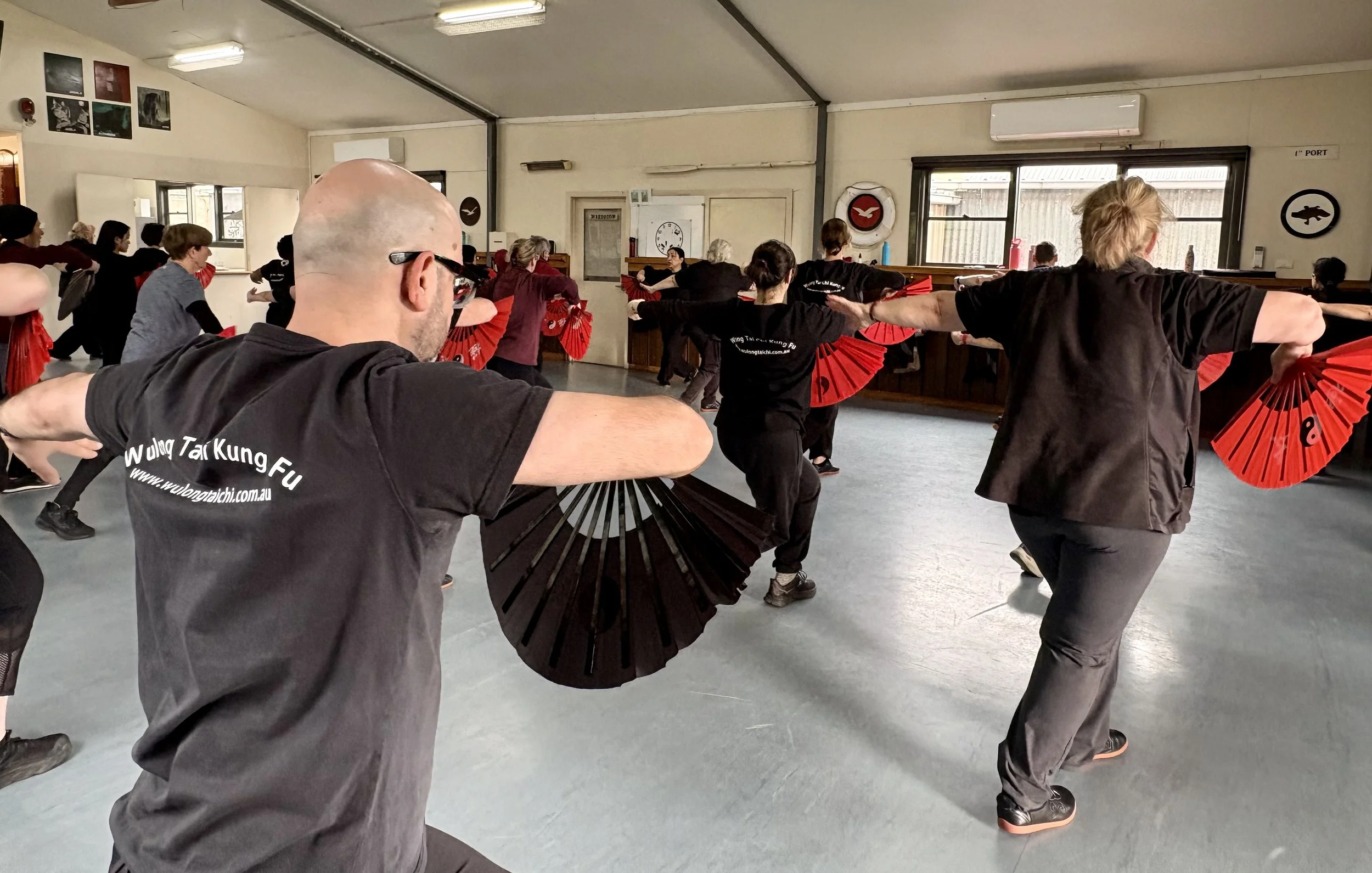
A growing body of scientific evidence continues to confirm what Tai Chi practitioners have long experienced: this gentle, mindful practice has powerful effects on mental wellbeing.
A new randomized controlled trial published on 4 May 2026 in Frontiers in Public Health provides some of the strongest evidence yet that Tai Chi meaningfully improves stress regulation, attention, and psychological resilience in adults.
About the Research
The trial investigated whether an 8‑week Tai Chi program could improve key psychological outcomes in adults aged 30–55.
The researchers conducted a randomized controlled trial involving 68 adults who were screened for eligibility and then randomly assigned to either a Tai Chi intervention group or a control group. Participants in the Tai Chi group completed supervised 60‑minute sessions three times per week for eight weeks, following the standardized 24‑form simplified Yang‑style routine, which included warm‑ups, core Tai Chi practice, and cool‑down breathing exercises. The control group continued their usual daily activities and did not engage in any structured exercise or mind‑body practices during the study period.
Stress, attention, and psychological resilience were assessed at baseline and after the intervention using the Perceived Stress Scale (PSS‑10), the Attention Network Test (ANT), and the Connor‑Davidson Resilience Scale (CD‑RISC‑25). Data were analysed using repeated‑measures ANOVA to evaluate changes over time and differences between groups.
Key Findings
The Tai Chi group showed significant improvements across all three psychological domains:
Stress regulation: PSS‑10 scores dropped from 21.36 to 16.64
Attention: Reaction times improved by 47.76 ms
Psychological resilience: CD‑RISC‑25 scores increased by 9.5 points
The control group showed no meaningful changes.
What This Means
1. Tai Chi reduces stress and supports emotional balance
The study found a large reduction in perceived stress among Tai Chi participants. Slow, mindful movement combined with breath regulation helps calm the nervous system and restore balance.
2. Tai Chi sharpens attention and mental clarity
Tai Chi’s coordinated movements and mindful focus strengthen the brain’s attentional networks. Participants demonstrated faster reaction times and improved cognitive efficiency.
This is particularly valuable for adults juggling work, family, and daily responsibilities.
3. Tai Chi builds psychological resilience
The largest improvement was in resilience—the ability to adapt to stress and recover from challenges. Tai Chi participants gained a substantial and meaningful shift on the resilience.
For Wulong students, this reinforces Tai Chi as a practice that strengthens emotional stability, confidence, and inner strength.
Conclusion
This new research confirms what Wulong has always taught: Tai Chi is a powerful, holistic practice that supports the whole person—body, mind, and spirit.
Whether you are seeking:
better stress management
improved focus and clarity
greater emotional resilience
or simply a calmer, healthier way of living
Tai Chi offers a gentle yet deeply effective path.
Even eight weeks of consistent practice can create measurable improvements. Every class—every breath, every movement—contributes to long‑term wellbeing.
Read the research “Tai Chi as a public health intervention: effects on stress regulation, attention, and psychological resilience in adults” published 4 May 2026 here https://doi.org/10.3389/fpubh.2026.1791759
If you are looking for a program to support your health, try a Wulong class today.
Click here to see all our class locations and timings. https://www.wulongtaichi.com.au/tai-chi-classes