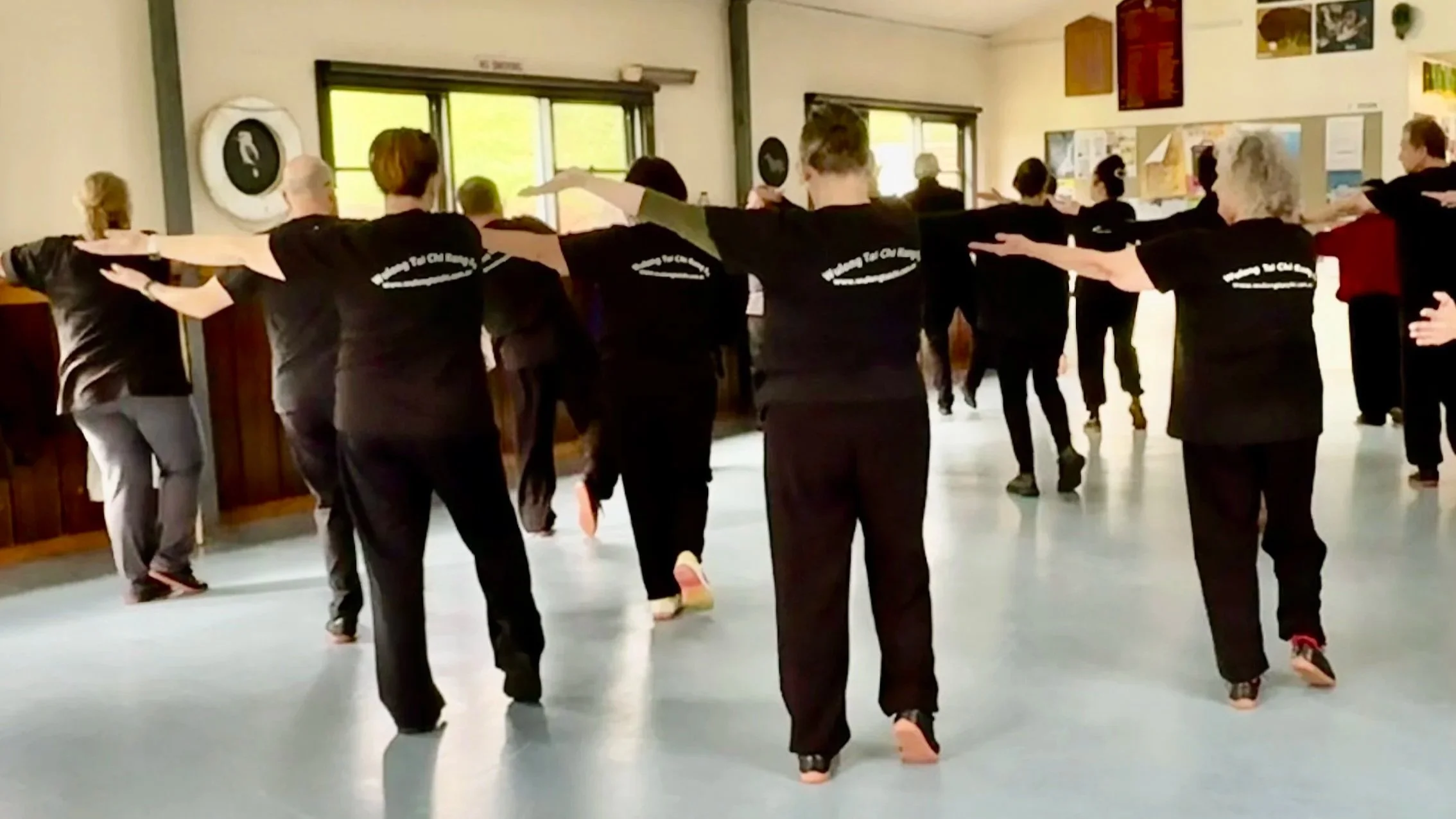
If you’ve ever stepped into a Wulong Tai Chi Kung Fu class, you already know how different these practices feel. The slow, deliberate movements, the steady breath, the sense of grounding — it’s a kind of strength that doesn’t rely on force. Now, one of the largest research reviews ever conducted has confirmed what many Wulong students already experience: tai chi and qigong deliver measurable health benefits for people living with musculoskeletal conditions.
Whether you’re a long‑time practitioner or someone exploring tai chi benefits for the first time, this new evidence offers a powerful reason to keep moving.
Research Summary
Published in May 2026, an umbrella review analysed 92 meta‑analyses covering 1744 randomised controlled trials. It examined how tai chi, qigong, Baduanjin, Yijinjing, Wuqinxi and other traditional Chinese exercise modalities support adults and older adults with musculoskeletal disorders — including knee osteoarthritis, low back pain, neck pain, fibromyalgia, osteoporosis, chronic ankle instability and more.
Participants practised these exercises for periods ranging from a few weeks to over six months. The researchers re‑analysed all effect sizes and graded the certainty of evidence using the GRADE framework.
The findings were remarkably clear. As the paper states:
“high‑certainty evidence demonstrated that [these exercises] significantly improved physical function in knee osteoarthritis… enhanced mental health… and improved sleep quality in fibromyalgia.”
Highlights: Specific Benefits by Exercise Modality
1. Tai Chi — Pain Relief, Better Function and Stronger Bones
Tai chi was the most studied modality, and the results were consistently strong:
Pain reduction: Tai chi significantly reduced chronic musculoskeletal pain, including knee osteoarthritis and general MSD‑related pain. One high‑certainty result showed meaningful relief compared with no exercise.
Improved physical function: Tai chi improved walking, standing, stair climbing and overall joint mobility in knee osteoarthritis.
Mental health benefits: Tai chi improved anxiety, depression and emotional wellbeing in knee osteoarthritis and neck pain.
Bone mineral density: Tai chi increased bone density in people with osteopenia and osteoporosis — particularly at the femoral neck and lumbar spine.
2. Qigong — Better Sleep and Emotional Wellbeing
Qigong practices (including breathing‑focused and meditative forms) showed benefits across several conditions:
Improved sleep quality: High‑certainty evidence showed qigong improved sleep in fibromyalgia, reducing fatigue and night‑time disturbance.
Mental health support: Qigong improved depression and anxiety scores in musculoskeletal conditions, helping participants feel calmer and more emotionally balanced.
Gentle mobility gains: Qigong improved balance and physical function in older adults and those with chronic pain.
3. Baduanjin — Stiffness Reduction and Functional Strength
Baduanjin, a structured qigong routine of eight movements, demonstrated:
Reduced stiffness: Particularly in knee osteoarthritis and low back pain.
Improved physical function: Gains in balance, mobility and daily movement tasks.
Better quality of life: Improvements in general wellbeing and self‑efficacy.
4. Yijinjing — Joint Stability and Muscle Strength
Yijinjing, known for its tendon‑strengthening focus, showed:
Improved muscle strength: Especially in older adults and people with frailty.
Better joint position sense: Helpful for chronic ankle instability and balance.
Enhanced physical function: Gains in mobility and stability.
5. Wuqinxi — Balance and Whole‑Body Coordination
Wuqinxi (“Five Animal Frolics”) contributed:
Improved balance: Particularly in older adults and those with chronic pain.
Better functional mobility: Enhanced coordination and movement confidence.
What This Means
Tai chi and qigong are not just gentle exercises — they are powerful, evidence‑based tools for long‑term musculoskeletal health.
The review also found that the best results come from consistent practice:
3+ sessions per week
150+ minutes weekly
6 months or longer for the strongest gains
This aligns beautifully with Wulong’s teaching approach: mindful movement, breath regulation, balance training and community connection. Every class you attend supports your joints, your mood, your sleep and your long‑term resilience.
Call to Action
Read the research published 20 May 2026 here https://doi.org/10.1136/bjsports-2026-111792.
If you are looking for a program to support your health, try a Wulong class today. Click here to see all our class locations and timings. https://www.wulongtaichi.com.au/tai-chi-classes