
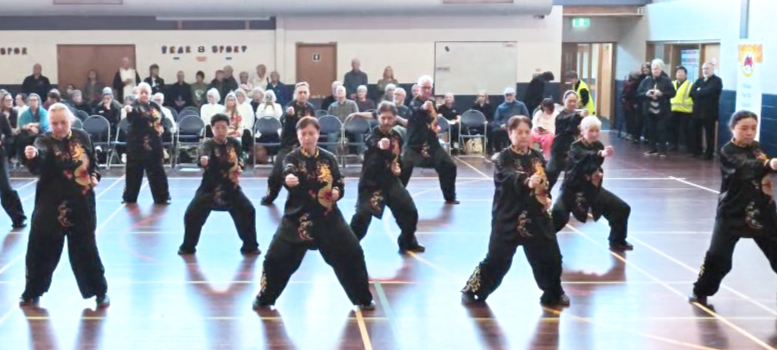
For many people, tai chi and qigong begin as gentle exercise. But for older adults who practise regularly, these arts often become something deeper — a steadying rhythm, a source of connection, and a way to feel more at home in their own bodies. A new study published 23 September 2026 offers compelling evidence for this experience, showing that the quality of engagement in Health Qigong is closely linked with resilience, social support, and psychological wellbeing.
Whether you’re a long‑time Wulong student or someone curious about tai chi benefits, this research shines a light on why mindful movement matters — and how it supports healthier, more confident ageing.
Research Summary
Published on 23 September 2026, the study explored how older adults engage with Health Qigong and how that engagement relates to wellbeing. Researchers surveyed 1,173 older practitioners across six Chinese cities, examining how regularly they practised, how attentively they coordinated movement and breath, and how independently they maintained their routine.
The study developed an 18‑item Health Qigong Engagement Scale and found three key dimensions of practice:
Continuous behavioural engagement (regularity and consistency)
Normative focused engagement (quality of attention, breath–movement coordination)
Autonomous persistent engagement (self‑directed practice and persistence)
The findings were clear:
“Greater Health Qigong engagement was associated with higher resilience, perceived social support, and psychological wellbeing.”
The researchers also discovered that resilience explained nearly 28% of this association, and that social support strengthened the link between engagement and resilience.
Highlights: What the Study Found
1. Regular practice supports psychological wellbeing
Older adults who practised Health Qigong more consistently reported higher levels of self‑acceptance, purpose in life, autonomy, and positive relationships. As the authors note, practice creates “a psychological space temporarily detached from daily trivial affairs,” helping buffer accumulated stress.
2. Focused, mindful movement builds inner stability
Coordinating breath, movement, and attention — a hallmark of tai chi and qigong — was strongly linked with resilience. The study describes this as “gentle attention to and active regulation of bodily states,” which helps practitioners feel more capable and grounded.
3. Persistence strengthens confidence and adaptability
Those who practised even when facing obstacles (weather, fatigue, limited space) showed higher resilience. This mirrors the study’s finding that autonomous persistence reflects “the individual’s inner driving force and tendency toward active self-regulation.”
4. Social support amplifies the benefits
Practising with peers or feeling supported by family made the positive effects stronger. When older adults perceived higher social support, the connection between engagement and resilience grew significantly.
What This Means
Our practice is not only about learning movements — it’s about showing up regularly, breathing with intention, and allowing the mind to settle. The study’s three dimensions of engagement map directly onto the Wulong teaching approach:
Consistency: Attending weekly classes or practising at home builds rhythm and confidence.
Quality of focus: Coordinating breath, movement, and intention is central to Wulong’s method and supports deeper calm.
Autonomy: Students who practise outside class, even briefly, strengthen their resilience and sense of mastery.
The findings also highlight the importance of community — something Wulong students experience every week. Shared practice, encouragement, and gentle companionship help transform tai chi from exercise into a wellbeing pathway.
In short: the more meaningfully you engage with your practice, the more your practice supports you.
Closing Call to Action
Read the research Health Qigong engagement scale and wellbeing in Chinese older adults published 23 September 2026 here: https://doi.org/10.3389/fpubh.2026.1889948 If you are looking for a program to support your health, try a Wulong class today. Click here to see all our class locations and timings https://www.wulongtaichi.com.au/tai-chi-classes